
Last updated November 4, 2026
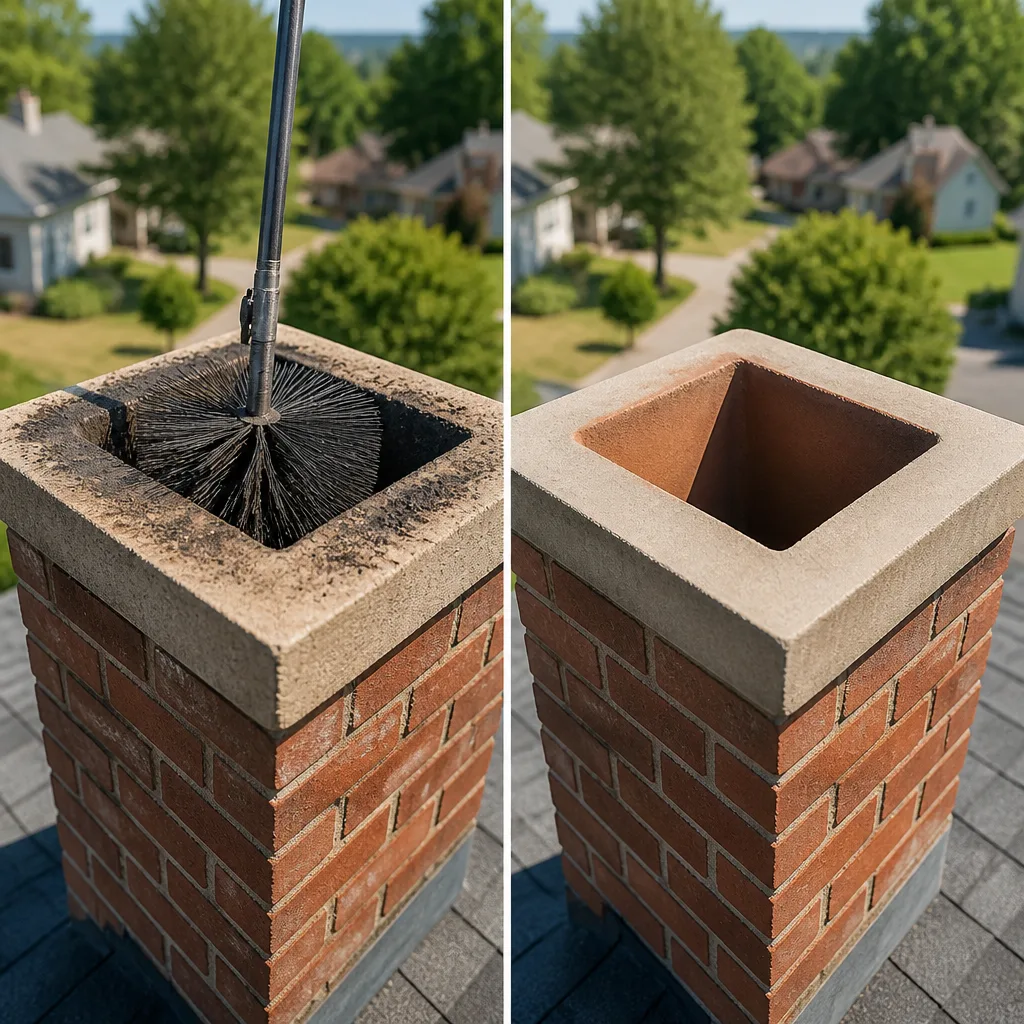 Sweep & inspection
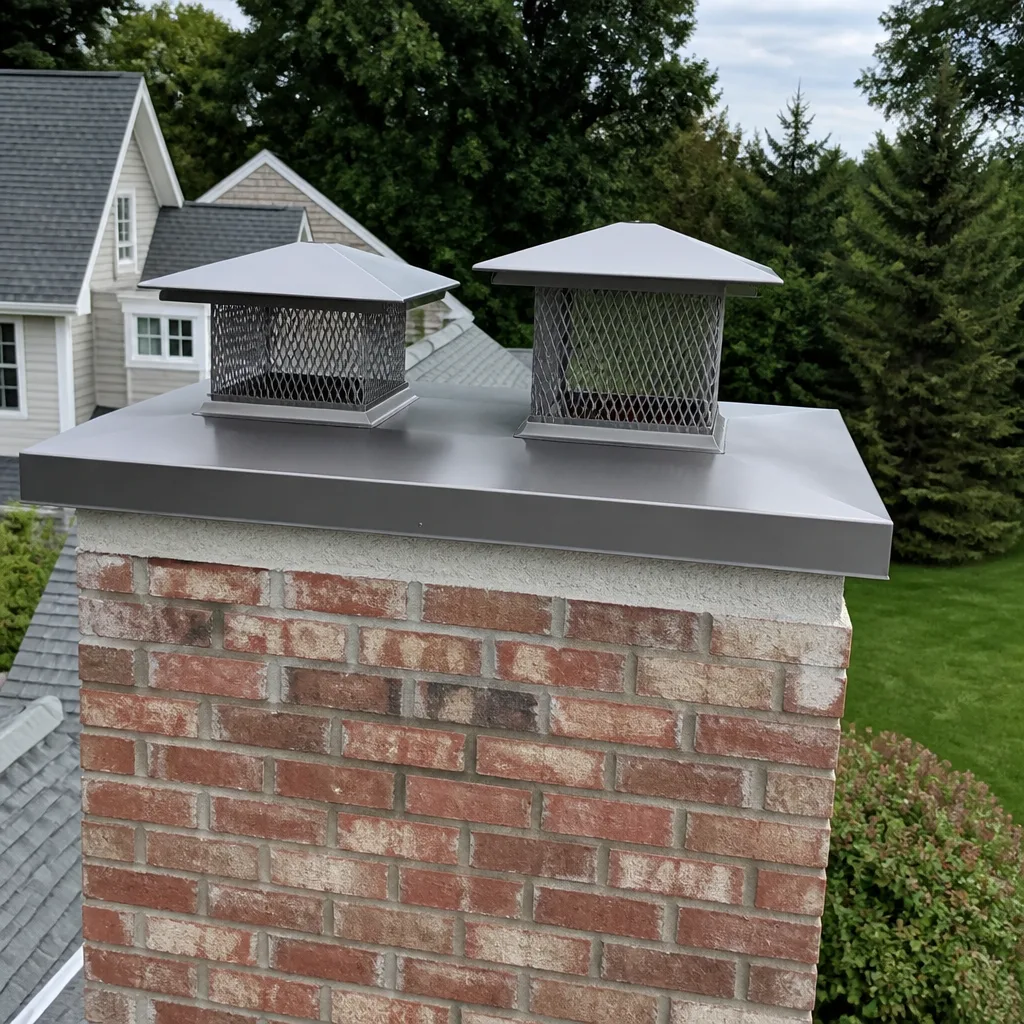 Caps & crowns
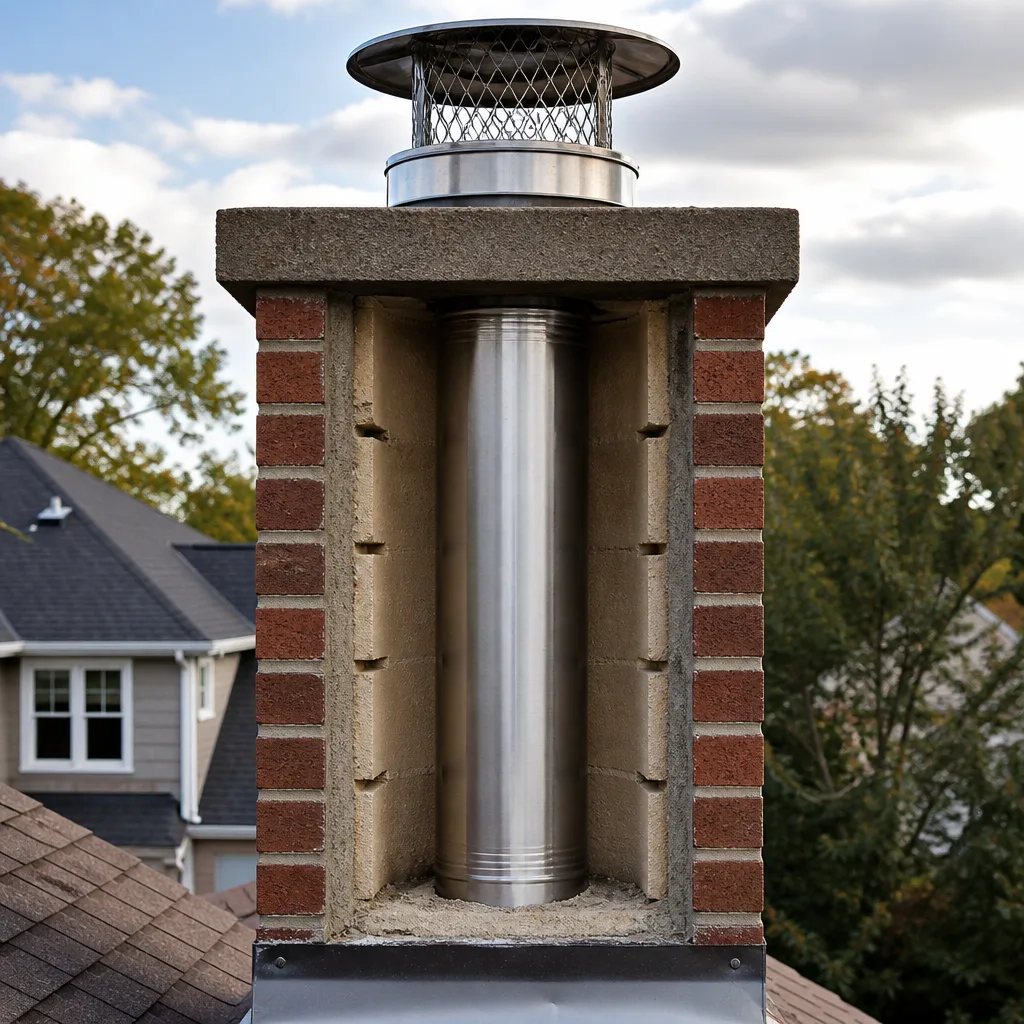 Flue relining
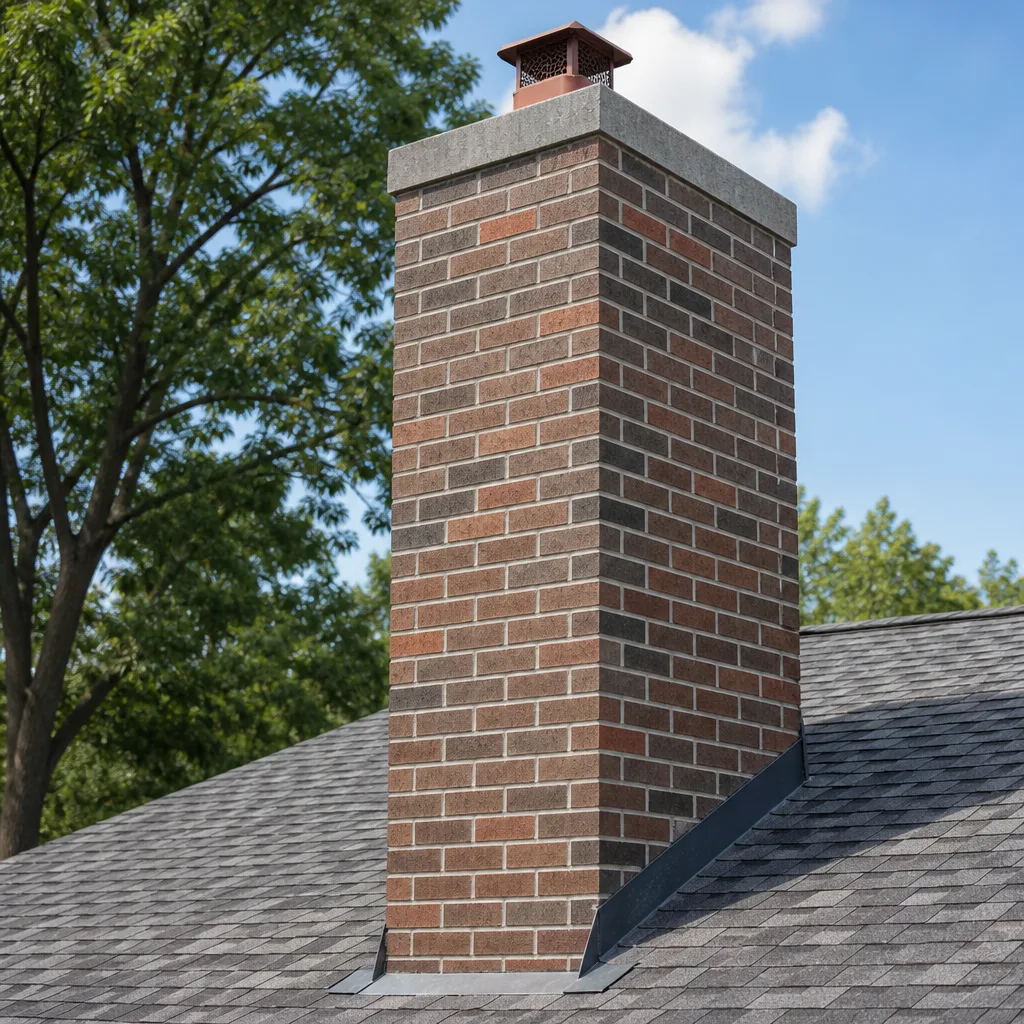 Masonry repair
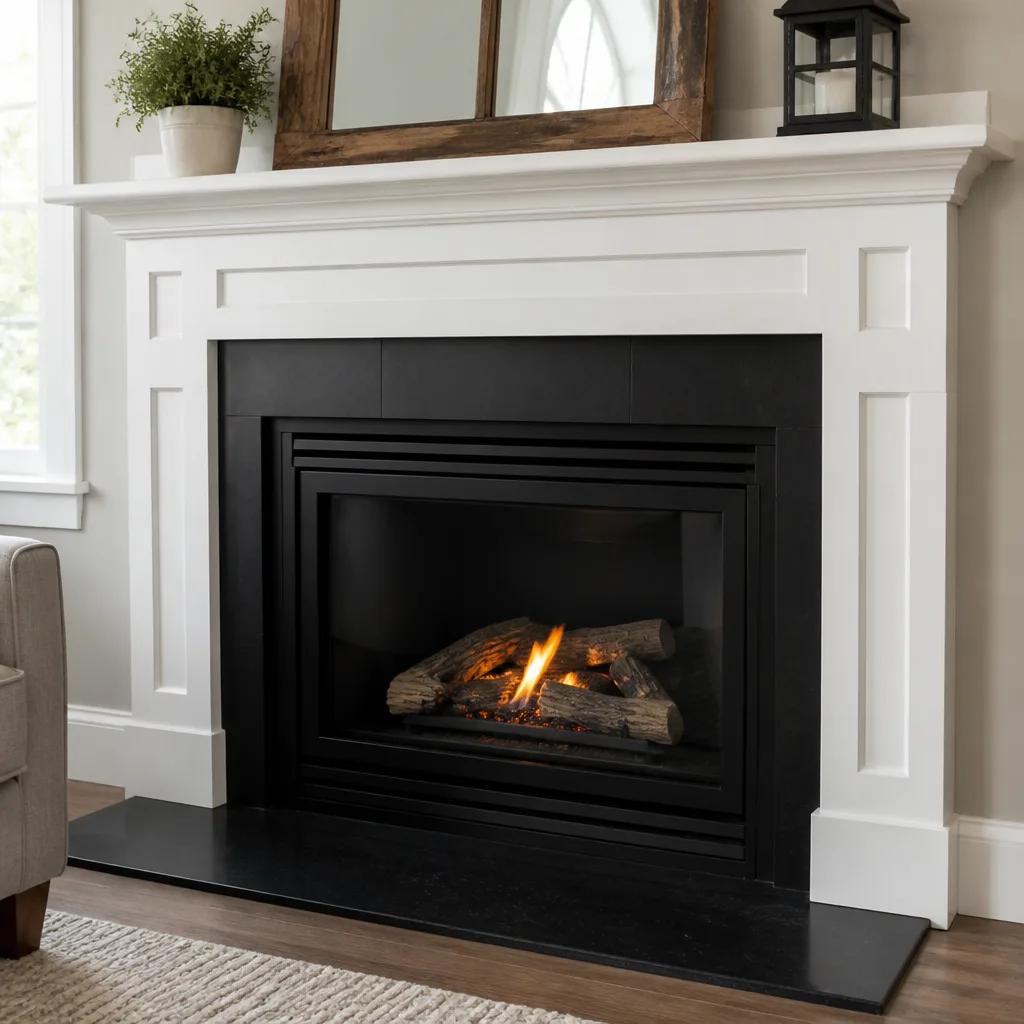 Gas fireplace service
Level 1 sweep and inspection to the NFPA 211 annual standard - flue, crown, cap, and flashing checked and photographed
Chimney sweep logs do not sweep chimneys. They loosen some creosote - which then falls where a brush and vacuum still have to collect it.
DIY vs Professional Chimney Cleaning: The Fremont Homeowner’s Decision Guide
A homeowner with a $45 brush kit can remove loose soot from the firebox and lower flue, and can completely miss a cracked tile 15 feet up the liner that is venting combustion gases into the wall cavity. That is the entire DIY vs. professional debate in one sentence. This guide tells Fremont homeowners exactly where the DIY ceiling is: what you can safely do yourself, what you physically cannot do without professional equipment, and how to make the call without wasting money or leaving a fire hazard in place. You will learn what a camera inspection actually reveals, which creosote stages respond to brushing and which do not, and why documentation matters more than most people realize.
Styles & brands we work with
- Sweep & inspection
- Caps & crowns
- Flue relining
- Masonry repair
- Gas fireplace service
Quick Answer
DIY chimney cleaning in Fremont is genuinely appropriate for loose ash removal, visual cap checks, and damper operation, but it cannot replace a professional sweep in most cases. A manual brush cannot remove Stage 2 or Stage 3 creosote, cannot inspect the flue liner for cracks or gaps, and cannot provide the documentation you would need for an insurance claim after a fire. For homeowners who burn wood regularly, a professional chimney sweep with rotary equipment and a camera scope is the only way to verify the system is actually safe to operate.
Table of Contents
- What DIY Chimney Cleaning Can Actually Accomplish
- What DIY Physically Cannot Do
- Understanding Creosote Stages and Why They Matter
- The Hidden Costs of DIY Equipment
- DIY, Insurance, and the Documentation Problem
- BAAQMD Compliance and Fremont Burn Days
- Common Mistakes to Avoid
- When to Call a Professional
- Frequently Asked Questions
- The Bottom Line
What DIY Chimney Cleaning Can Actually Accomplish
There is a real, legitimate place for homeowner maintenance in Fremont. Not everything about chimney care requires a technician, and knowing what you can handle yourself saves money and helps you understand your system better. The key is staying within tasks that are visual, accessible, and low-risk.
Here is what we tell Fremont homeowners is genuinely appropriate to do on their own:
- Ash removal from the firebox. After the fire is completely cold, shoveling out loose ash is safe and necessary. You will want a metal ash bucket with a tight-fitting lid, and you will want to carry it outside immediately rather than leaving it in the garage.
- Visual cap check from the ground. You can look up at the chimney cap with binoculars and check for obvious problems: missing mesh, heavy rust, a cap knocked off-kilter by wind or an unlucky bird. If the cap is damaged, that is a sign to call for repair, not a DIY fix.
- Damper operation. You can open and close the damper and feel whether it seats properly. A damper that sticks, rattles, or will not fully close is wasting conditioned air year-round and needs attention.
- Exterior crown observation. From the roof edge or a ladder placed safely on level ground, you can look for cracks in the concrete crown around the flue opening. Cracks wider than about an eighth of an inch let water in, and water is what turns a minor masonry issue into a major repair.
These four tasks cover the realistic DIY ceiling for safe, useful maintenance. None of them require entering the flue, climbing onto the roof, or handling creosote. That is deliberate. The moment you start talking about brushing the flue itself, you have crossed into a different category of risk and equipment.
What DIY Physically Cannot Do
The most important thing to understand about chimney cleaning is that what you can see from the firebox represents a small fraction of the system. The flue liner runs up through the center of your home, hidden behind brick, drywall, and framing. Its condition determines whether your fireplace is safe to operate, and inspecting it requires a camera.
Here is what a professional Chimney Cleaning Fremont service accomplishes that no homeowner with a brush kit can replicate:
- Camera inspection of the full flue liner. A professional sends a video scope up the entire length of the flue and records what it finds. This is how cracked tiles, damaged mortar joints, and gaps between liner sections get discovered. A brush passing over a crack removes soot from the surface, but does nothing to identify the structural problem underneath.
- Detection of Stage 2 and Stage 3 creosote. Creosote is not one substance. It changes form depending on burn temperature and frequency. Stage 1 is loose and brushable. Stage 2 is a tar-like glaze that hardens into a coating. Stage 3 is the same glaze baked into a shiny, hardened mass that resists manual brushing entirely. The only way to know which stage you are dealing with is to look at it directly, which is what the camera does during a professional sweep.
- Rotary cleaning of glazed creosote. A rotary cleaning system uses rapidly spinning chains or rods attached to a drill to grind away Stage 2 and Stage 3 creosote that a manual brush simply burnishes. This is not a bigger version of what you have at home. It is a different tool, a different technique, and a different outcome.
- Assessment of structural components. A professional looks at the cap, crown, flashing, damper, and firebox with the eyes of someone who knows what early damage looks like. What a homeowner might see as a small crack, a technician recognizes as the first sign of water intrusion that will widen with time.
The line between DIY and professional is not about effort. It is about physics. A manual brush cannot reach the full circumference of certain flue shapes, cannot generate the mechanical action needed for glazed creosote, and cannot see what it is doing. No amount of homeowner diligence overcomes those limits.
Understanding Creosote Stages and Why They Matter
Creosote is the byproduct of incomplete wood combustion. Smoke cools as it travels up the flue, and the unburned particles in that smoke condense on the liner walls. What those particles become depends on how hot your fires burn and how often you use the fireplace.
Here is the breakdown of the three creosote stages and what each means for cleaning:
Stage 1: Brushable Soot and Flakes
The early stage of creosote. It appears as a fine dust or small flakes, and in this form it responds well to a manual brush. A homeowner with a properly sized brush can remove some Stage 1 material from the lower flue. The problem is that Stage 1 creosote higher up, beyond the reach of a standard chimney brush, still accumulates. A professional sweep with extension rods removes it from the full height of the liner.
Stage 2: Tar-Glazed Coating
Stage 2 creosote forms when burn temperatures fluctuate, allowing condensation to dry into a tar-like layer. It resembles baked-on grease and resists manual brushing. A homeowner will push a brush over it and watch the bristles skate across the surface without dislodging much of anything. Rotary rods with chain action are effective at this stage.
Stage 3: Hardened Glaze
Stage 3 creosote is Stage 2 that has been repeatedly reheated and cooled until it becomes a dense, shiny, rock-hard coating. This material is a serious fire hazard, and it cannot be brushed away. Professional-grade rotary systems paired with chemical treatments are the standard approach. In our experience in Fremont homes, Stage 3 is most common in fireplaces that have been used for years without a sweep, especially with unseasoned wood or restricted air supply.
Here is the practical takeaway: you cannot know which stage you have without looking at the flue lining itself. Guessing wrong means either wasting a weekend brushing material that will not come loose, or worse, assuming the chimney is clean when a hardened glaze is quietly waiting for the right temperature to ignite.
The Hidden Costs of DIY Equipment
The DIY framing usually starts with the price of a brush kit and ends with the assumption that professional cleaning is the expensive option. When you price out what an actual, competent DIY attempt requires, that math falls apart quickly.
Here is what proper DIY equipment actually costs to acquire or rent for a one-time job:
- Chimney brush and rod set sized for your flue: A basic manual kit runs from $50 to $120 depending on flue dimensions. The problem is that a brush sized for a 6-inch liner does not work on an 8-inch liner, and Fremont homes vary in flue size.
- Rotary cleaning system rental: Rotary chimney cleaning kits with flexible rods and chain attachments rent for $60 to $150 per day from tool rental yards. This is the equipment you would need for anything beyond Stage 1 creosote.
- Camera scope: A basic inspection camera with enough cable length to reach the full flue height costs $100 to $300 to rent. Using one without experience means interpreting what you see without the trained eye that distinguishes normal staining from problematic gaps.
- Disposable containment materials: Proper drop cloths, plastic sheeting, a HEPA-filtered vacuum, and personal protective equipment including a respirator add another $60 to $150. Creosote dust is corrosive and messy, and it will find its way into your carpet and furniture if you are not set up correctly.
- Roof access equipment: If you are cleaning from the top down, you need a ladder tall enough to reach the ridge safely, which most homeowners do not own. Renting one adds $40 to $80.
Total estimated cost for a one-time competent DIY attempt: $310 to $800, not counting the time spent learning how to do it safely. A professional sweep in Fremont typically costs less than that, and it includes the camera inspection, the rotary cleaning, the documentation, and the trained assessment of what was found. The “savings” of DIY are largely a fiction once you account for equipment that actually gets the job done rather than equipment that just makes you feel like you did something.
DIY, Insurance, and the Documentation Problem
This is the part of the DIY conversation that almost no one brings up, and it may be the most important section in this guide. If a chimney fire occurs in a Fremont home, the homeowner’s insurance company investigates. One of the first questions in that investigation is whether the chimney had been maintained and cleaned by a qualified professional.
Here is what a professional sweep provides that a day with a rented brush kit cannot:
- A dated service record. A professional chimney sweep documents what was found and what was done. That record establishes that you took reasonable steps to maintain the system.
- Camera inspection footage. Video evidence of the flue condition before and after cleaning demonstrates that the system was assessed, not just brushed blindly.
- Qualified assessment of system condition. A technician can document that the flue liner was intact, the cap was functional, and the damper seated properly at the time of service.
None of that exists when you clean the chimney yourself. You will not have a receipt from a chimney service, you will not have inspection footage, and you will have no way to demonstrate that the system was in acceptable condition before the fire. An insurance adjuster evaluating a six-figure fire claim will treat an undocumented homeowner-performed cleaning very differently from a professional service record. The risk calculus is not about whether you can technically perform the cleaning, it is about what happens afterward if something goes wrong. This is why we advise Fremont homeowners to think of professional chimney cleaning as documentation and verification, not just labor.
BAAQMD Compliance and Fremont Burn Days
Fremont sits within the jurisdiction of the Bay Area Air Quality Management District, the agency that regulates wood burning across the Bay Area. BAAQMD issues Spare the Air Alerts on days when particulate matter pollution is forecast to reach unhealthy levels, and on those days burning solid fuel in a fireplace or wood stove is prohibited.
What many homeowners do not realize is that operating a fireplace with a blocked or deteriorated flue during a permitted burn day is a violation whether the homeowner knew about the defect or not. The regulation does not distinguish between ignorance and disregard. A flue that has not been professionally inspected may have a hidden gap, a cracked tile, or a creosote blockage that makes it unsafe and noncompliant to operate.
The air quality concern is also a chimney condition concern. A clean, properly drafting chimney burns wood more completely and releases fewer particulates than a restricted, partially clogged one. A homeowner who burns wood in Fremont is choosing to operate a device that affects air quality for the entire neighborhood, and the responsible version of that choice includes making sure the venting system is functioning as designed.
If you plan to burn this winter, the practical step is to have the flue inspected and swept before burn season begins. That way, you know the system is clean, you know the liner is sound, and you can burn on allowed days without wondering whether you are venting more than heat out of the top of your house.
Common Mistakes to Avoid
In our experience working in Fremont, certain patterns show up again and again. These are the mistakes we see homeowners make, and avoiding them will save you money and stress.
- Assuming a visual check from the firebox is enough. The firebox is the bottom two feet of a system that may run thirty feet or more. You are looking at the cleanest, most accessible part and drawing conclusions about the entire flue above it.
- Using a brush on Stage 2 or Stage 3 creosote. Brushing glazed creosote does nothing except polish the surface. You could spend an entire weekend and believe the job is done while the hardened, flammable coating remains exactly where it was.
- Burning unseasoned wood to save money. Green wood burns cooler and produces far more creosote than seasoned wood. The money you save on a cord of wood gets spent on more frequent sweeps and higher fire risk.
- Skipping the annual inspection for gas fireplaces. Gas fireplaces produce different byproducts than wood, but they still need their venting systems checked for blockages, animal nests, and corrosion. A gas fireplace that has not been looked at in five years is not automatically safe just because it has not produced visible smoke.
- Ignoring the dryer vent. This is a separate venting system that carries the same fire risk profile as a chimney. We include dryer vent cleaning in every conversation about home fire safety because a clogged dryer vent is among the most common causes of residential fires in Fremont. You cannot see the lint accumulation behind the dryer, and by the time the dryer starts taking longer to dry clothes, the restriction is already significant.
- Waiting until winter to book a sweep. Every year, the same pattern repeats: homeowners burn all winter, forget about the chimney all summer, and then call in November when their own schedules are already full of holiday plans. Booking in late summer or early fall means you are ready to burn when the first cold evening arrives.
When to Call a Professional
Here are the specific scenarios where a professional is not optional. If any of these apply to your home in Fremont, schedule a sweep before you light another fire:
- You have not had the chimney inspected or swept in over a year.
- You burn wood more than a few times per season.
- You smell smoke inside the house during or after a fire.
- You see dark, shiny buildup inside the firebox or on the damper.
- You hear animals or birds in the chimney.
- You are buying a home with a fireplace and no service records.
- Your dryer vent has not been cleaned in over a year.
Chimney Cleaning Fremont offers free estimates in Fremont. Call (844) 980-4364 and we will walk you through what your system needs. We answer 24/7. Fast dispatch from 7am to 7pm, Sunday through Friday.
Frequently Asked Questions
A standard professional chimney sweep in Fremont typically runs between $180 and $350 depending on flue height, creosote stage, and whether the system has been maintained recently. That price includes the camera inspection, the cleaning itself, and the written report. Call (844) 980-4364 for an exact quote, estimates are free.
A wood-burning fireplace in Fremont should be swept once per year at minimum, and more often if you burn more than a couple of cords per season. Gas fireplaces should be inspected annually even though they need less frequent cleaning. The one-year interval is the standard recommended by the Chimney Safety Institute of America and followed by most insurance carriers.
Yes, and this is the single biggest reason to choose professional cleaning over DIY. The camera inspection is the only way to verify the flue liner is intact from top to bottom. A brush cleans what it touches. A camera shows you what is actually there: cracks, gaps, animal nests, or glazed creosote that a brush cannot remove.
Creosote accumulates in stages. Year one might produce a brushable dusty layer. By year three, that layer can become a tar-like glaze that resists brushing. By year five, it can harden into a dense, shiny coating that is a serious fire hazard waiting for the right conditions. Wood smoke thickens the buildup, and Fremont’s occasional burn restrictions can mean you cannot verify your system is compliant without an inspection.
You can rent rotary cleaning equipment and a camera scope, but you cannot rent the training to interpret what you see or the service record that documents what was done. The equipment cost alone often matches or exceeds a professional sweep. And if a fire occurs afterward, an insurance claim faces an uphill battle without professional documentation. Call (844) 980-4364 for a free estimate before you spend money on rentals.
Chimney cleaning does not require a permit in Fremont. Structural repairs, such as rebuilding a chimney crown or relining a flue, may require permitting through the city’s building department. A professional chimney service will know which repairs trigger the permit requirement and can advise you accordingly before work begins.
The Bottom Line
The DIY versus professional chimney debate in Fremont is not really about cost. It is about what you can verify versus what you have to assume. A homeowner can remove ash, check the damper, and look at the cap from the ground. A homeowner cannot inspect the flue liner, remove glazed creosote, or document system condition for insurance purposes. You choose professional cleaning because you want to know the system is safe, not because you cannot be bothered to try it yourself. If you have not had your chimney swept in over a year, call (844) 980-4364 for a free estimate. We answer 24/7. Fast dispatch from 7am to 7pm, Sunday through Friday. The estimate is free, the price is set per job by the written estimate, and you will know exactly what your chimney needs before any work begins.
Written by the team at Chimney Cleaning Fremont, serving Fremont since 2011.
See the difference
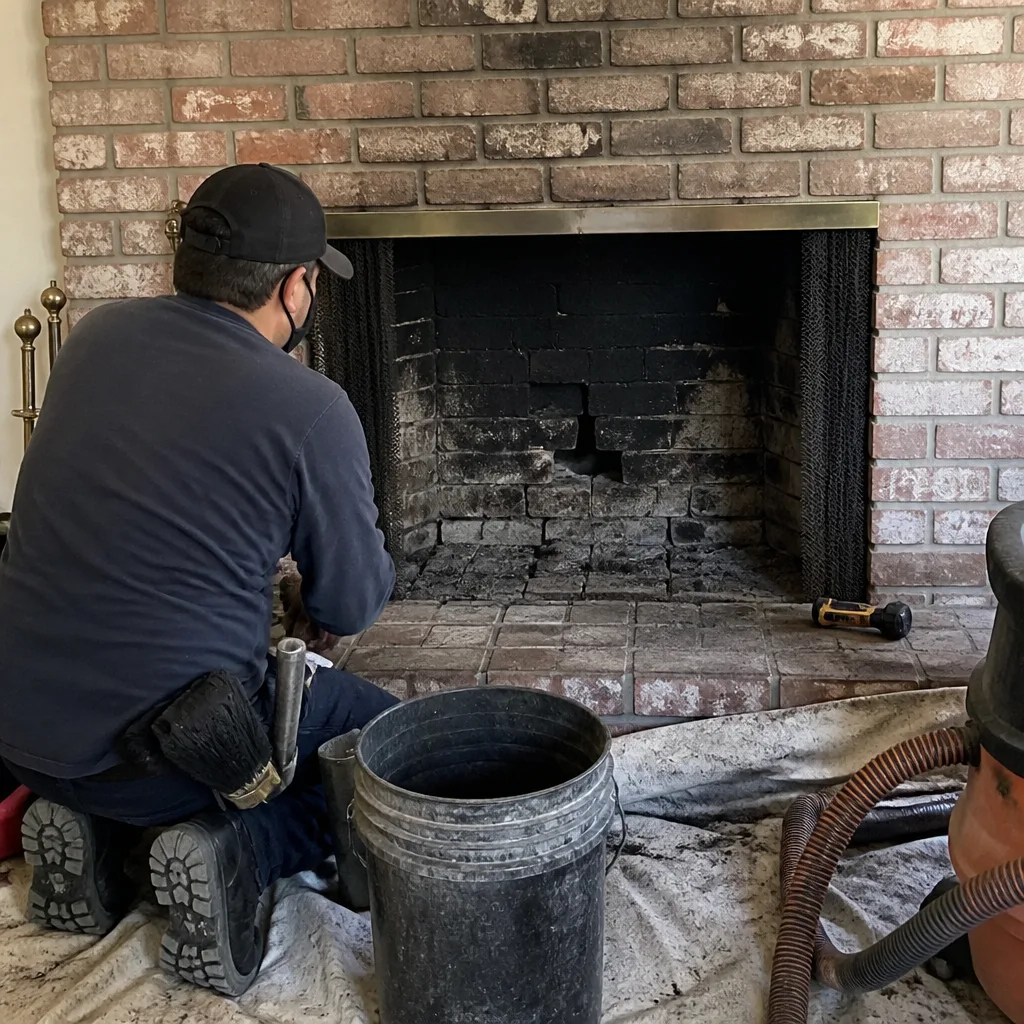 Before
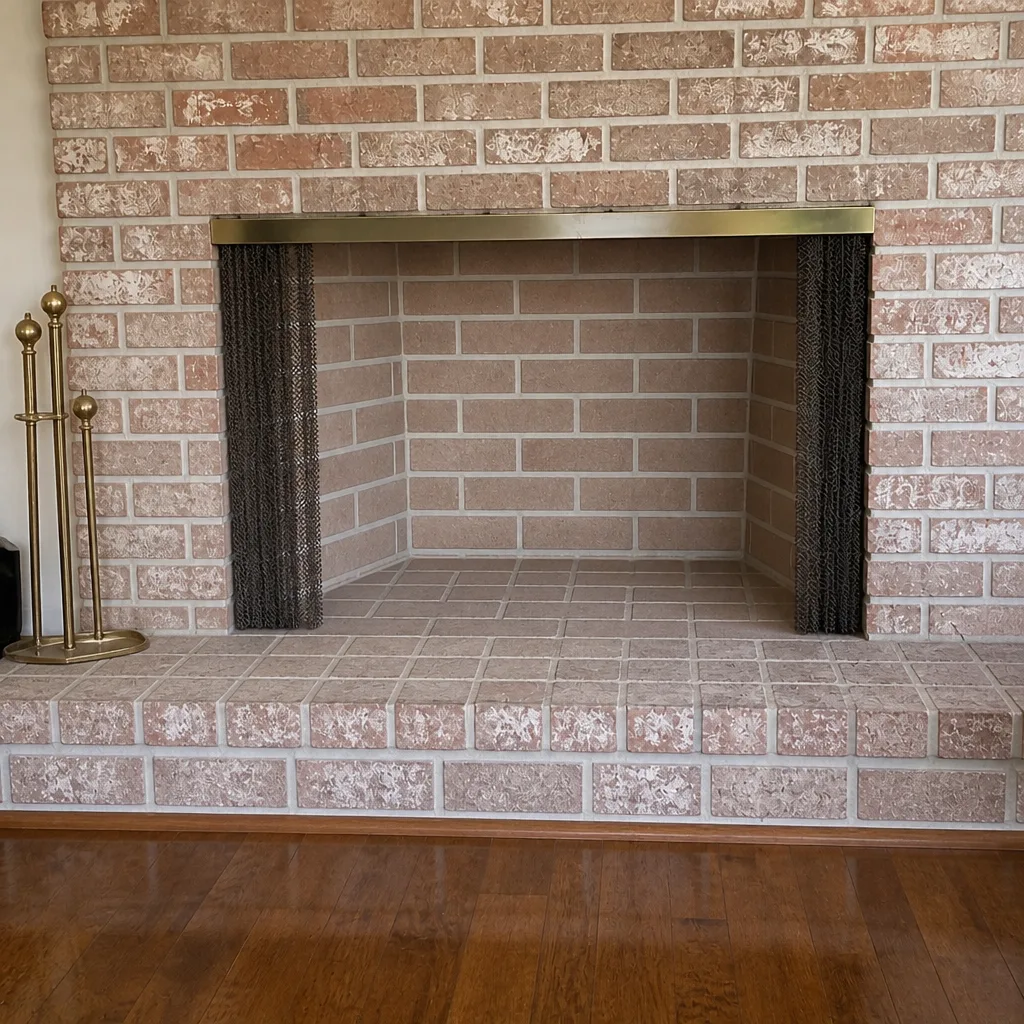 After
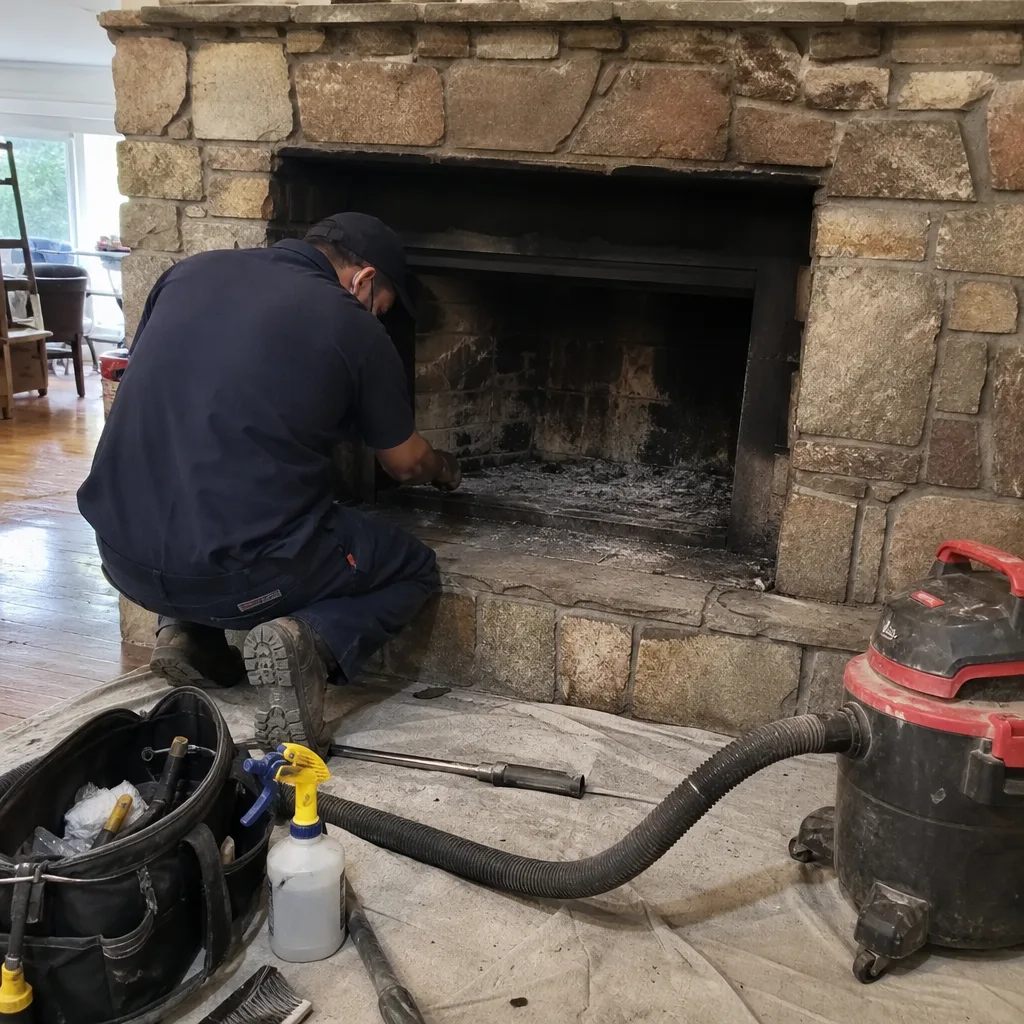 Before
 After
 Before
 After